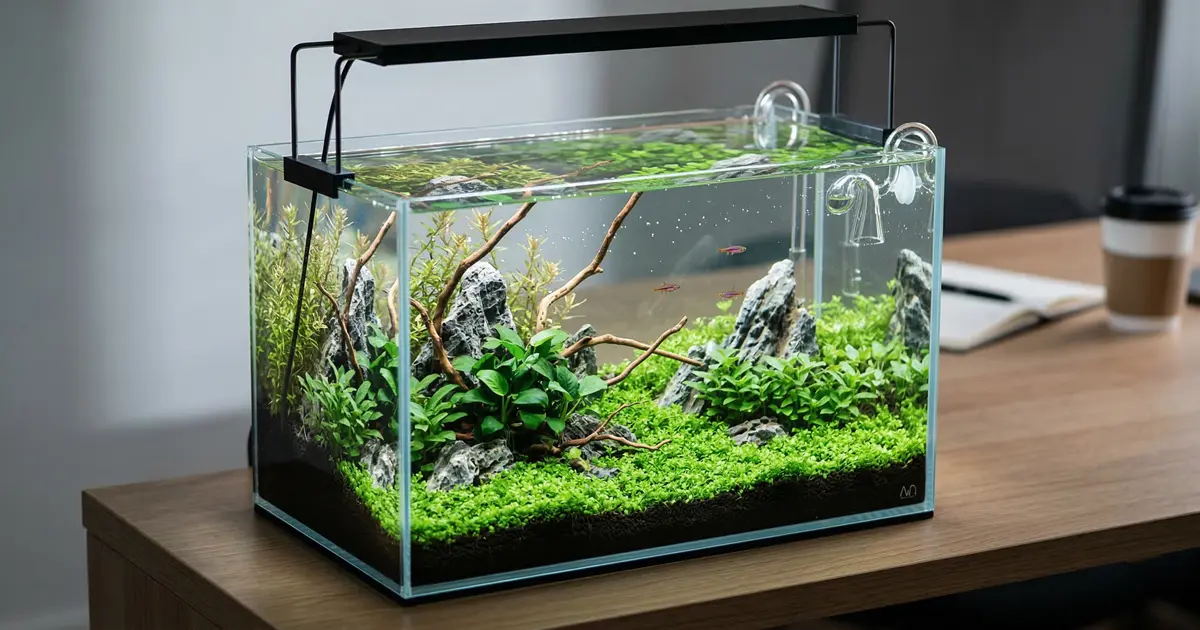
How to Set Up a Nano Planted Aquarium
Nano planted aquariums pack a massive visual punch into a tiny footprint. While small tanks look incredible on a desk or kitchen counter, their low water volume means parameters can swing rapidly. Success in nano aquascaping requires precise equipment choices, smart plant selection, and strict maintenance to keep the micro-ecosystem stable.
Choosing the Right Nano Tank
A nano tank typically ranges from 2 to 10 gallons. Because the volume is so small, evaporation and temperature shifts happen fast. If you're building a custom rimless cube from scratch, ensure the glass can handle the water pressure using our Glass Thickness Calculator. Before adding water and hardscape, figure out exactly how heavy that desk setup will be by checking our Volume & Weight Calculator.
Scaling Down Hardscape and Substrate
In a small space, scale is everything. Use finer stones like Seiryu or Dragon stone, and choose a fine-grain active soil so delicate plant roots can easily anchor. A fine substrate creates the illusion of a much larger landscape.
Buying too much soil for a 5-gallon tank is a common mistake. Use our Substrate Calculator to get the exact amount needed for a healthy root bed without wasting money.
Nano Filtration and Flow
Flow is tricky in nano setups. You need enough water movement to prevent dead spots, but not so much that you blow your delicate stem plants and tiny rasboras into the glass. A hang-on-back (HOB) or a mini canister filter is ideal. Find the perfect turnover rate by running your tank size through our Flow Rate Calculator.
Lighting for Small Spaces
Nano tanks are usually shallow, meaning high-intensity lights can easily blast your plants and trigger fast algae outbreaks. You want a sleek, dimmable LED fixture. Dial in your photoperiod and intensity requirements using our Lighting Calculator to keep your flora healthy and algae-free.
Temperature Stability
Small volumes of water lose heat rapidly in cooler rooms. A reliable mini heater is crucial to avoid temperature swings that stress livestock and plants. Don't guess the wattage—determine exactly what your nano tank needs with our Heater Calculator.
Best Nano Aquarium Plants
- Carpeting Plants: Hemianthus callitrichoides (HC Cuba) or Micranthemum 'Monte Carlo'.
- Midground: Cryptocoryne parva, Staurogyne repens, and Anubias Nana Petite.
- Background: Rotala rotundifolia or Hemianthus micranthemoides (Pearl Weed).
Frequently Asked Questions
How many fish can I keep in a nano tank?
Keep the bioload extremely light. A 5-gallon tank is perfect for a single Betta or a dedicated Neocaridina shrimp colony. If you step up to a 10-gallon, a small school of Chili Rasboras or Ember Tetras works beautifully.
How often should I do water changes on a nano tank?
Because toxins like ammonia build up quickly in small water volumes, perform 30-50% water changes weekly. During the initial cycling phase, you may need to do this two or three times a week to keep the environment safe.
Do I need CO2 for a nano tank?
It depends on your plant choices. While you can run a low-tech nano tank with easy epiphytes, injecting CO2 with a mini regulator will drastically improve growth rates and help outcompete algae in that small, volatile environment.